
LifeStyle
Netflix Confirms Fight Against Anthony Joshua and Tyson Fury

Netflix has moved to position itself within boxing’s long-running rivalry, announcing a proposed fight between Anthony Joshua and Tyson Fury at a premature stage in negotiations.
The announcement followed Fury’s April 2026 win over Arslanbek Makhmudov in London, a fight that was his first broadcast on the platform. Within minutes of the result, Netflix’s UK account stated that a Joshua vs Fury bout would take place in autumn, indicating plans to stream the fight globally.

Anthony Joshua – Instagram
That statement came without a public agreement from Anthony Joshua. Ringside at the same event, he declined to step into the ring for a face-off and later confirmed that no deal had been finalised.
The timing aligns with Netflix’s recent move into live sport, focusing on single-event broadcasts rather than long-term rights deals. Fury’s comeback fight formed part of that push, streamed globally at no extra cost to subscribers. The immediate shift to promoting a Joshua bout suggests the platform is trying to define expectations around what would be one of boxing’s highest-revenue fights.
This differs from standard fight promotion. Instead of the typical sequence involving press conferences, signed contracts and sanctioning approvals, the announcement was posted during the live broadcast itself.

Tyson Fury – Instagram
Despite the public statement, the fight is not finalised. Tyson Fury has said he has agreed to his side of a proposed deal and does not intend to pursue alternatives. Anthony Joshua, however, has taken a more measured position, pointing to the need for proper financial and contractual alignment.
This contrast has been consistent throughout their negotiations. What played out in London followed the same pattern, one fighter pushing for confirmation, the other avoiding public commitment.
Netflix’s interest is based on audience size. Anthony Joshua’s previous fight against Jake Paul drew tens of millions of viewers on the platform, showing that boxing can attract large global audiences when presented as a one-off event. A Joshua vs Fury fight would likely exceed that reach, particularly in the UK, where both fighters remain central figures.

Anthony Joshua – Instagram
At present, the fight is being promoted publicly but has not been agreed privately. Tyson Fury continues to describe the bout as necessary, even suggesting he could retire again if it does not happen. Anthony Joshua has not ruled it out but has avoided committing to a timeline, indicating he may take another fight beforehand.
Netflix’s early announcement increases pressure without confirming the fight. Until contracts are signed, it remains both a public statement and an ongoing negotiation, consistent with how discussions between the two fighters have played out over the past decade.








LifeStyle
Best Collagen Supplements in 2026: Benefits, Effectiveness and What to Know

Collagen has become a familiar name in beauty and wellness. Powders, drinks and capsules promise everything from better-looking skin to stronger nails and healthier joints, but the evidence for those benefits is mixed.
The useful questions are what a supplement contains, how much collagen it provides and whether its claims are supported by evidence.
Here are four collagen supplements to consider in 2026, along with their potential benefits and the evidence behind their claims.
Vital Proteins Collagen Peptides

Photo: Pinterest/@Vital Protein
Vital Proteins Collagen Peptides is a bovine collagen powder that provides 20g of collagen per recommended serving. The unflavoured powder can be mixed into hot or cold drinks, making it easy to add to coffee, smoothies or other foods.
The high collagen content makes it an option for people looking for a straightforward collagen supplement without a long list of added ingredients. Individual experiences vary, however, and changes in skin cannot be taken as proof that the supplement will produce the same results for everyone.
Research into oral collagen has produced mixed findings. Some studies have reported improvements in skin hydration and elasticity, although the quality of the evidence varies between trials.
Vida Glow Collagen Liquid Advance
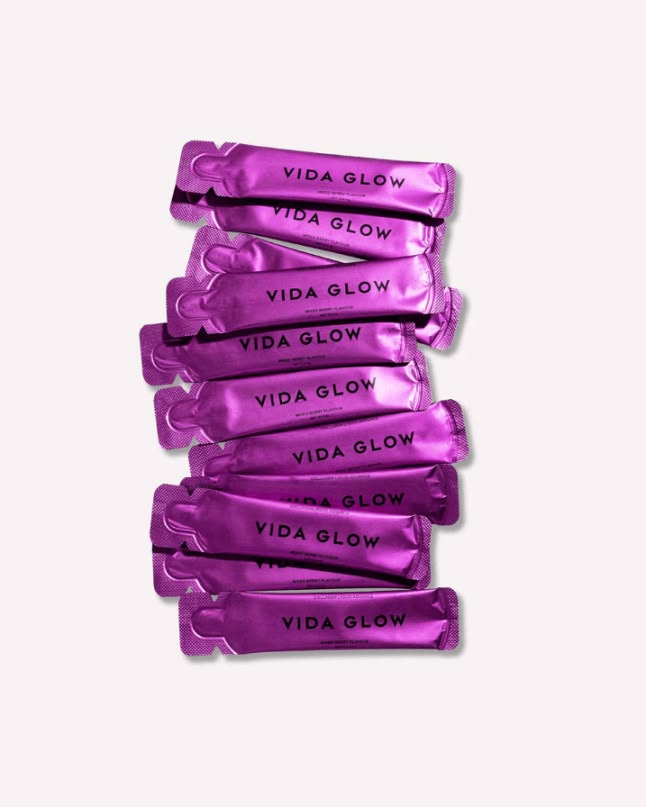
Photo: Pinterest/@Metro
Vida Glow Collagen Liquid Advance contains hydrolysed marine collagen, vitamin C and fruit extracts in individual liquid sachets. Each sachet provides around 4.8g of collagen.
The liquid format provides a pre-measured serving and may suit people who do not want to use a powder. Vitamin C contributes to normal collagen formation, while the marine collagen is sourced from fish.
There is currently no clear evidence that marine collagen is universally more effective than bovine collagen for skin. Anyone with a relevant fish allergy should also check the ingredients carefully before taking a marine collagen supplement.
Ancient + Brave True Collagen

Photo: Pinterest/@Namshi
Ancient + Brave True Collagen contains hydrolysed bovine collagen peptides and can be mixed into drinks or food. Its formula focuses on collagen rather than a lengthy combination of additional beauty ingredients.
Hydrolysed collagen peptides are commonly used in studies investigating oral collagen. Research has looked at their possible effects on skin hydration and elasticity, as well as their potential role in supporting joints.
The findings are not conclusive, so collagen should not be treated as a proven treatment for wrinkles or joint conditions.
Innermost The Glow
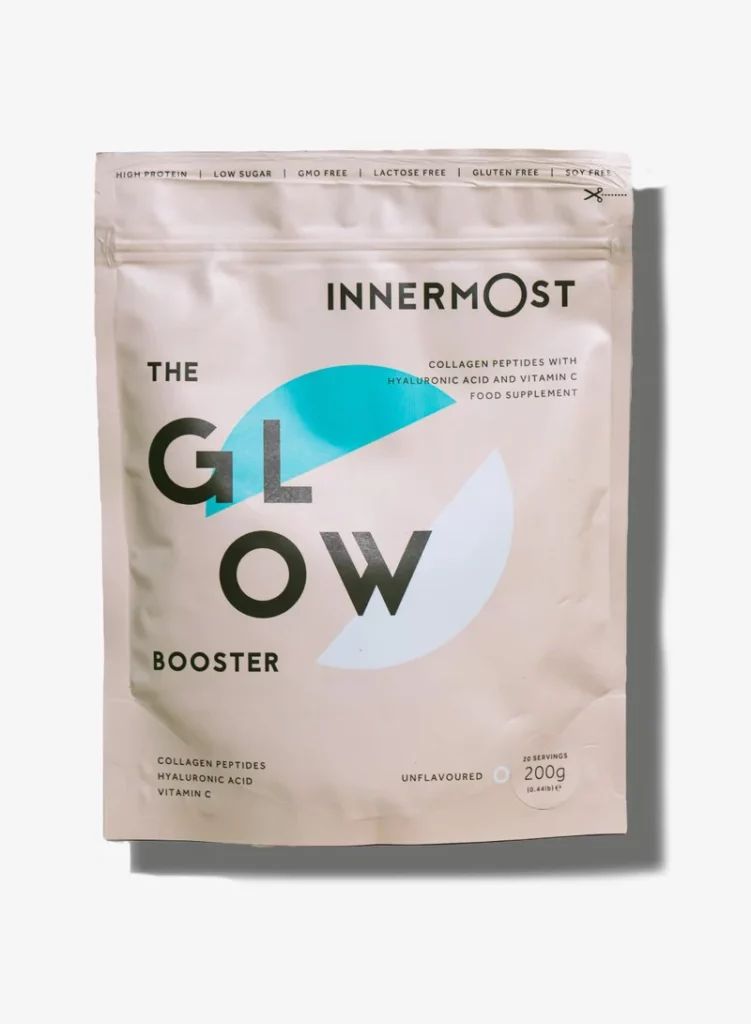
Photo: Pinterest/@Uncrate
Innermost The Glow combines collagen peptides with hyaluronic acid, biotin, folate and vitamin C. It comes in individual sachets, providing a measured serving without the need to scoop powder.
The additional nutrients give the formula a broader nutritional profile. Vitamin C contributes to normal collagen formation, while biotin contributes to the maintenance of normal skin and hair.
However, having several added ingredients does not automatically make a collagen supplement more effective. The benefits of each ingredient need to be considered separately from the evidence surrounding collagen itself.
What to Know Before Buying

Photo: Pinterest/@Uncrate
Collagen research remains mixed. Some clinical trials have reported improvements in measures such as skin hydration and elasticity, while reviews have raised concerns about small sample sizes, study quality and potential industry involvement.
When comparing products, check the collagen source, amount per serving, ingredients and allergens. Marine collagen is not suitable for people with relevant fish allergies, while bovine collagen is animal-derived and unsuitable for vegans.
Collagen can be part of a supplement routine, but it is not a guaranteed anti-ageing solution. Looking at the dose, ingredients and evidence behind a product’s claims gives a clearer picture of what you are actually buying.
LifeStyle
The Emotional Exhaustion Behind “I’m Fine”

“I’m fine” has become one of the most automatic responsesy in everyday conversation. It appears in offices, group chats, family calls and social settings before people even stop to consider whether it is true. For many, the phrase is less about honesty and more about getting through the day.
What often sits behind those two words is emotional exhaustion that rarely appears obvious from the outside. People still go to work, reply to emails, post online, attend meetings and maintain routines. They continue functioning, which is exactly why the problem is frequently overlooked.

Photo: Pinterest
Mental health conversations are discussed more openly today, but that has not necessarily made honesty easier. Reports from wellness and culture publications continue to highlight the same issue: people are overwhelmed, emotionally drained and increasingly used to hiding it.
Exhaustion now comes from multiple pressures at once. It is rarely just work, family responsibilities or financial stress alone. Constant notifications, economic uncertainty, long working hours, emotional labour and the expectation to remain available at all times all contribute to the problem. Even rest is often treated like another task.

Photo: Pinterest
There is also a social expectation attached to appearing emotionally stable. Many people have learned that staying calm is rewarded more than admitting they are struggling. In professional environments especially, emotional restraint is often mistaken for competence. Saying “I’m tired” can feel uncomfortable. Saying “I’m overwhelmed” can feel even more difficult.
As a result, emotional burnout has become less obvious in public life. It can look like productivity. It can look like reliability. It can look like responding to every message while privately feeling disconnected from everything else.

Photo: Pinterest
Psychologists and mental health researchers increasingly describe burnout as more than physical fatigue. Emotional numbness, irritability, poor concentration and detachment are now recognised as major warning signs. Yet many people dismiss these symptoms because they do not resemble the breakdowns often portrayed in films or online discussions.
The effects often appear in ordinary situations. People describe feeling mentally absent during conversations, struggling to enjoy experiences they once valued or becoming unusually impatient over minor inconveniences. Others speak about waking up exhausted even after sleeping or feeling anxious during periods meant for rest.

Photo: Pinterest
Digital culture has intensified emotional pressure. Social media encourages constant visibility, but not necessarily honesty. Many users present carefully controlled versions of themselves while privately dealing with stress, loneliness or burnout.
Many people also feel expected to absorb global crises while continuing daily life as normal. News alerts, financial concerns, conflict updates and personal responsibilities all demand attention at once. Emotional recovery time has become limited.
What makes emotional strain particularly difficult is that it often develops gradually. Unlike physical illness, there is rarely a single moment that forces someone to stop. The pressure builds over time until basic tasks begin to feel heavier than they should.

Photo: Pinterest
Researchers continue to emphasise that emotional wellbeing cannot be treated as secondary to productivity. Studies increasingly connect chronic stress and burnout to wider mental and physical health challenges, including anxiety, depression and long-term fatigue.
Many people still struggle to explain what they are feeling beyond “stressed” or “tired”. Others worry about becoming a burden if they speak honestly. So the easier response remains: “I’m fine.”
People continue using the phrase because it keeps conversations moving. It avoids explanation and protects privacy. At the same time, it allows emotional exhaustion to remain hidden in plain sight.
Many people are not asking for major fixes or constant reassurance. Often, they simply want the space to admit that coping has become harder than it looks.
LifeStyle
Why January Motivation Fades Faster Than We Expect

Every year, millions of people start January with ambitious goals, such as a new fitness routine, a productivity plan, healthier eating, or saving money. Early in the month, there is often a strong sense of possibility, partly due to what psychologists call the “fresh start effect.” This effect, documented in research by Dai, Milkman and Riis (2014), shows that temporal landmarks like the beginning of a new year can help people mentally separate from past setbacks, temporarily boosting commitment to new goals.

Photo Credit – Google
Despite this early enthusiasm, motivation often drops sharply within weeks. By the third or fourth week of January, many resolutions have already slipped, and by February, a majority of people abandon their initial plans. Research supports this trend, showing that sustaining New Year resolutions is challenging for most individuals. Understanding why this happens helps explain that fading motivation is not a failure of character, but a predictable psychological pattern.
Motivation is largely driven by emotion and reward, both of which fluctuate. Early in January, new goals can trigger the brain’s reward systems, including dopamine responses to novelty and expected progress. Once a routine sets in or progress feels slow, the initial emotional boost often diminishes. Research indicates that relying solely on these short-term spikes makes adherence fragile. While dopamine plays a role, the exact relationship between neurochemicals and goal persistence is complex and can vary between individuals.

Photo Credit – Instagram
Another factor is the gap between expectations and reality. People often visualise rapid, dramatic results, such as a fitter body, a decluttered home, or noticeable productivity gains. In practice, meaningful change is incremental and sometimes barely visible day to day. When outcomes do not match expectations, motivation can decline, although the degree varies depending on the person.
Environmental factors also influence behaviour. In the UK and similar latitudes, January is cold and dark, which can affect mood and energy in some individuals. Reduced sunlight influences circadian rhythms and serotonin levels, contributing to lower drive for those susceptible to seasonal low mood. Additionally, the transition out of the holiday period often disrupts routines, delaying the establishment of new habits. These factors do not affect everyone equally, but they help explain why January can be a difficult month for maintaining energy and focus.

Photo Credit – Google
Finally, the way goals are set affects their longevity. Vague resolutions, such as “get fit” or “read more,” lack the specificity required to guide daily behaviour. Research shows that measurable, time-bound, and structured goals increase the likelihood of follow-through. Goals tied to clear actions reduce decision fatigue and provide consistent feedback, which helps maintain effort even when motivation wanes.
Evidence from psychology suggests that motivation alone is rarely sufficient for long-term change. Systems and habits matter more. Strategies that improve adherence include structured routines that link actions to daily habits, specific and measurable goals that define when, where, and how a task will be completed, and accountability through friends, groups, or coaching. The effectiveness of these strategies may vary depending on individual circumstances, but they are generally supported by research.

Understanding that early January enthusiasm is typically temporary, not permanent, reframes the experience of fading motivation. With realistic planning, structured habits, and some accountability, people can convert initial energy into sustainable behaviour rather than relying on motivation itself as the sole source of success. While individual experiences differ, these approaches give the best chance of turning early-year optimism into lasting results.


Kim Kardashian Hugs Romeo Beckham in Sweet Moment at Singapore Grand Prix

Brooklyn Beckham and Nicola Peltz Arrive Paris Fashion Week

Rihanna Celebrates Daughter Rocki’s First Birthday With Never-Before-Seen Photos


-

 Netflix5 months ago
Netflix’s “The Four Seasons” Original Series Back for Season 2
-

 Fashion4 months ago
Romeo Beckham Teases New Apparel Brand
-

 Entertainment5 months ago
Who Is Noah Price? Meet Venezuela Fury’s Young Boxer Husband
-

 Movies4 months ago
Zendaya and Tom Holland Share Intimate Moment at First Red Carpet Appearance
-

 Celebrity Style5 months ago
Kylie Jenner Steps Out in a Skin-Tight Dress
-

 Celebrity News5 months ago
The Beckhams Enjoy Yacht Day in Ibiza
-

 Celebrity News5 months ago
Kim Kardashian and Kris Jenner Enjoy a Night Out at Spago After Being Called ‘Sisters’
-

 Beauty4 months ago
Sunscreens Worth Wearing Right Now
You must be logged in to post a comment Login