
Fashion
King Charles III Makes Surprise Front-Row Appearance at Tolu Coker’s London Fashion Week Show
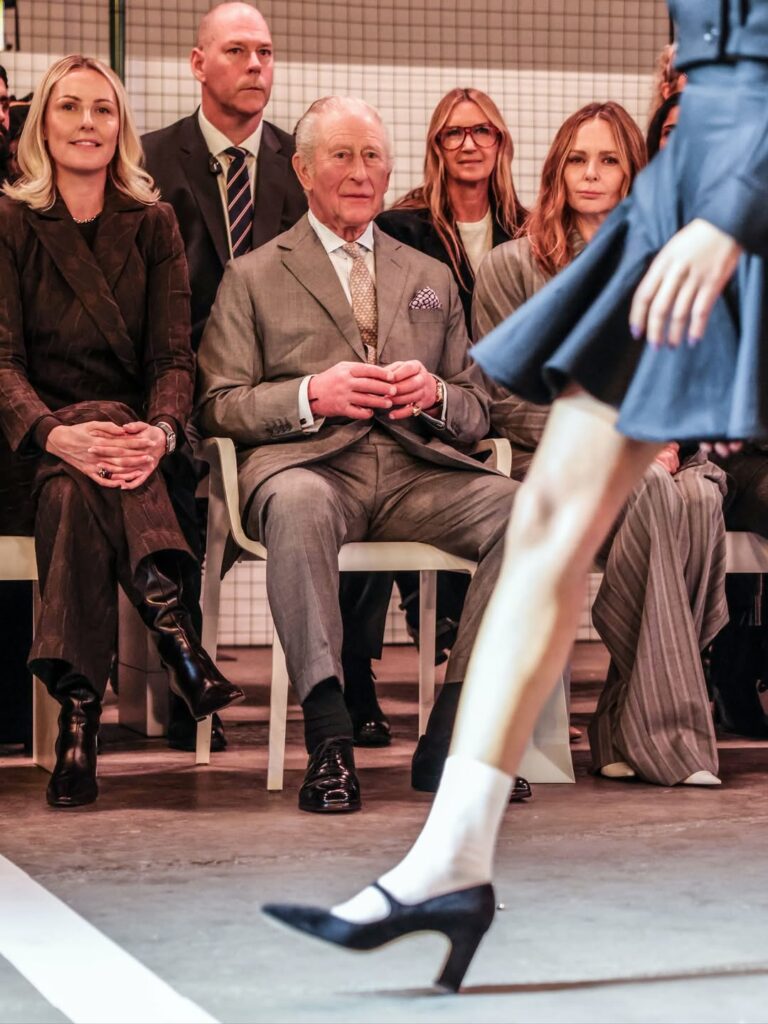
London Fashion Week opened on February 19, 2026, and is scheduled to run through February 23. King Charles III made a surprise appearance at the British-Nigerian designer Tolu Coker’s runway autumn/winter show at 180 Studios, marking the first time since 2018 that a senior royal has sat in the front row at London Fashion Week.
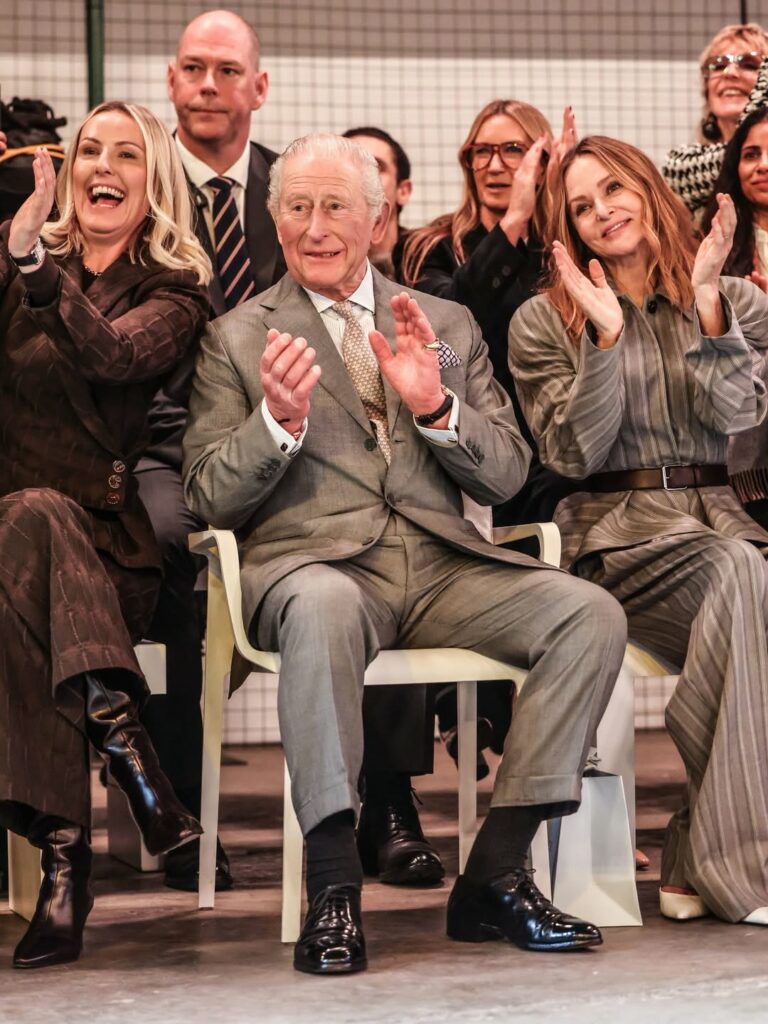
Photo: Getty Images
The King was seated in the front row next to fashion designer Stella McCartney and Laura Weir, CEO of the British Fashion Council. He wore a gray suit with a single-breasted jacket layered over a long white shirt, paired with matching trousers with folded hems. He completed the look with a patterned bronze tie and black shoes.
Tolu Coker launched her label in 2018 after graduating from Central Saint Martins. She is known for her unisex silhouettes that are rooted in modern storytelling. Coker was recently named a finalist for the LVMH Prize for Young Fashion Designers.
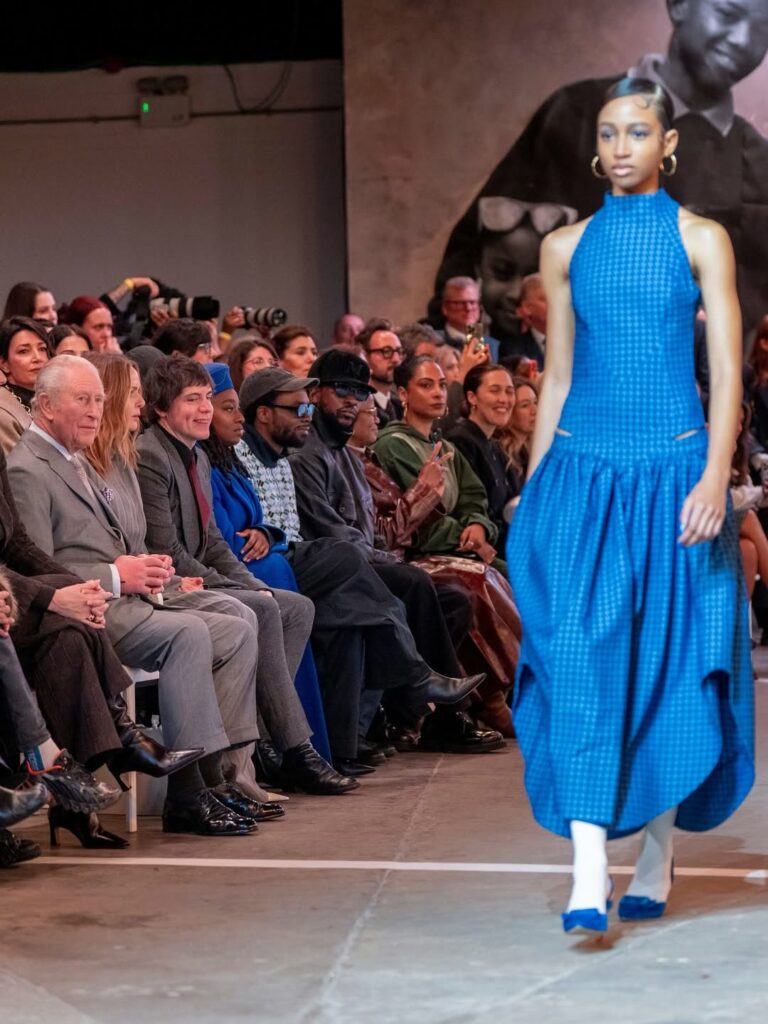
Photo: Getty Images
Coker is also a former beneficiary of The King’s Trust, founded by King Charles III, which provided mentorship and support when she started her brand. For her autumn/winter 2026 collection, she took inspiration from her upbringing on the Mozart Council Estate in West London.
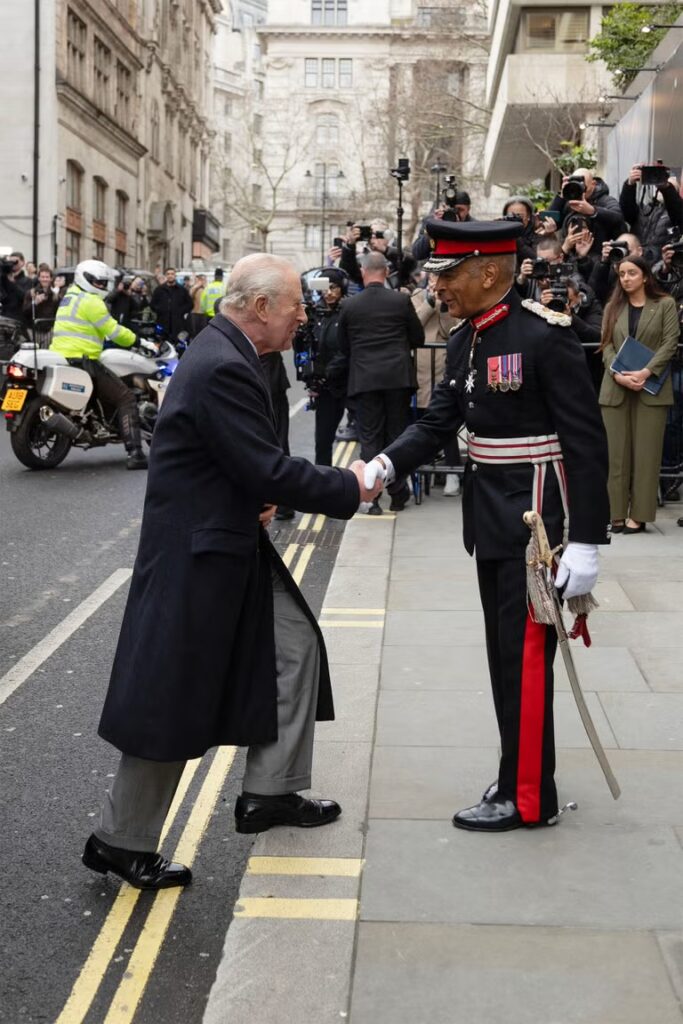
Photo: Getty Images
The King’s appearance at the show came hours after he addressed his concerns over his brother Andrew’s arrest, emphasizing that “the law must take its course.”
His attendance reinforced the designer’s rising influence and highlighted London Fashion Week as a platform for displaying diverse talent.







Fashion
Kate Moss & Emily Ratajkowski Are in Their Gucci Bag
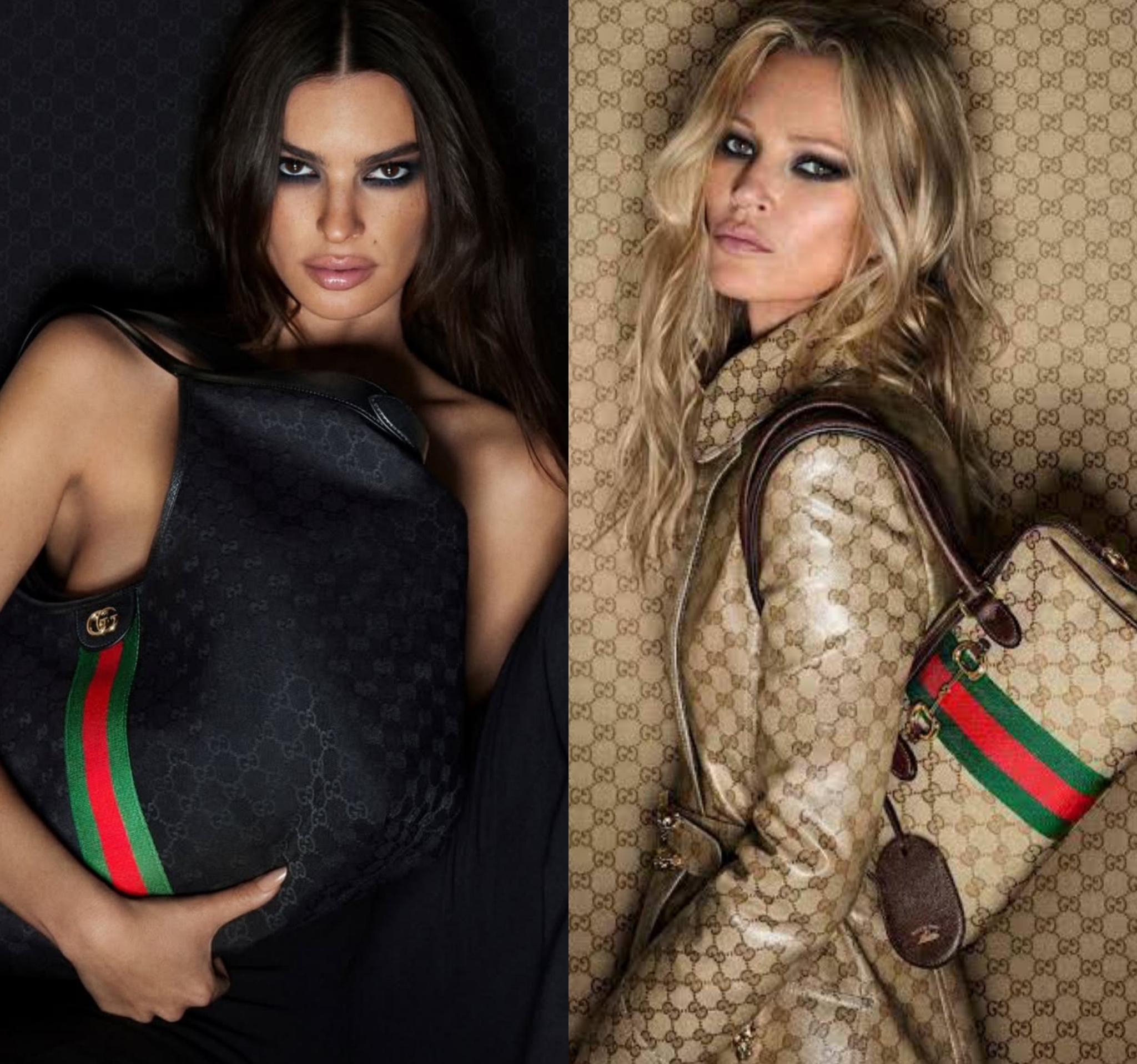
Gucci’s latest campaign focuses on a single message: the bag comes first. Everything else is reduced or removed, keeping attention on the product.
Fronted by Kate Moss and Emily Ratajkowski, the visuals centre on the house’s leather goods, with both women styled to remove distractions. In several images, they appear in lingerie or minimal clothing, holding oversized handbags placed at the centre of each shot. The bag is treated as the main object rather than an accessory, shaping how each image is read.
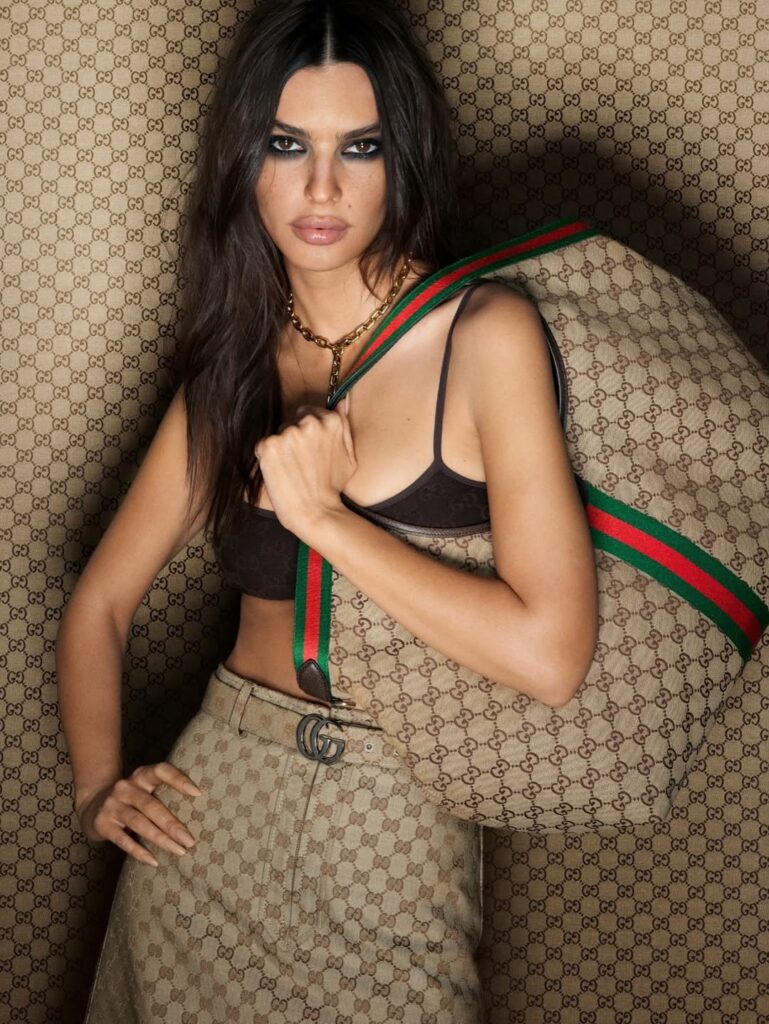
Emily Ratajkowski – Instagram
Shot by Mert Alas and Marcus Piggott, the campaign keeps its setting simple. There are no detailed backgrounds or layered concepts. The colours are muted, and the composition remains consistent across the series. This repetition keeps the focus on the handbags.
Structured totes and compact top-handle styles appear throughout, presented with minimal styling that highlights texture, hardware and scale. By limiting additional elements, Gucci places emphasis on craftsmanship and recognisable design codes instead of seasonal trends.
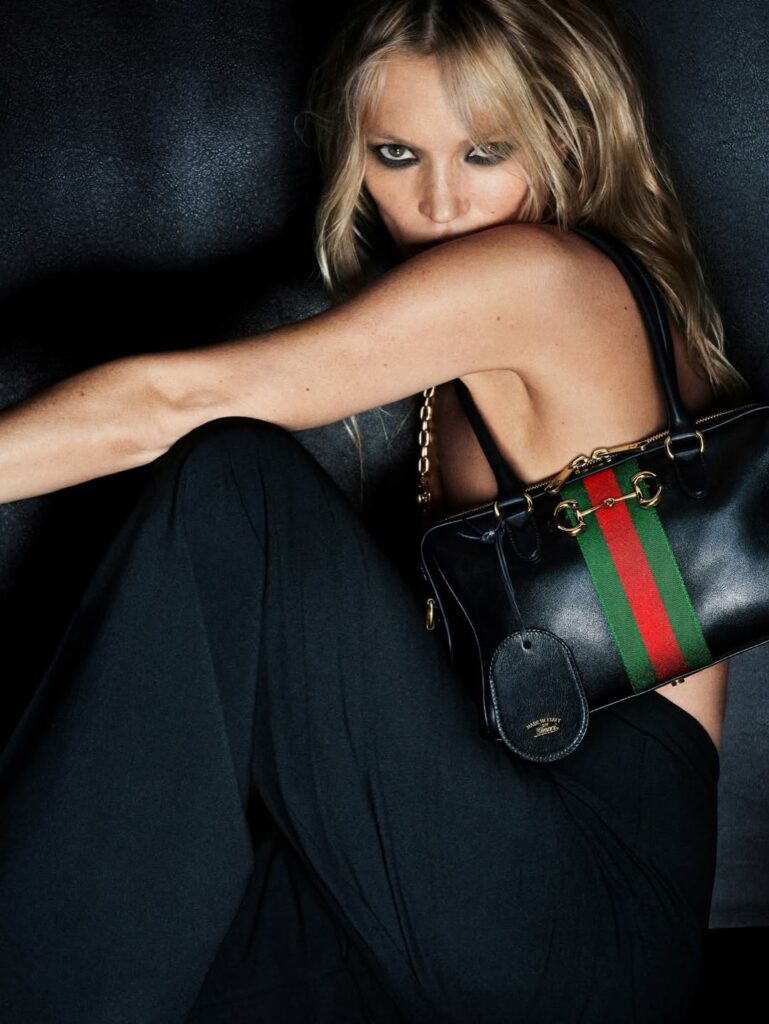
Kate Moss – Instagram
The casting is intentional. Moss brings a sense of familiarity, having long been associated with direct, minimal fashion imagery. She appears without heavy styling or added context, which aligns with the campaign’s approach. Ratajkowski, by contrast, reflects a more current media presence. Her visibility is closely tied to self-curation and digital culture, making her a relevant counterpart within the same visual structure.
The campaign also reflects Demna’s direction at Gucci, where attention has shifted towards clearly defined products. The focus on handbags, presented without distraction, points to a strategy that prioritises recognisable, marketable items.
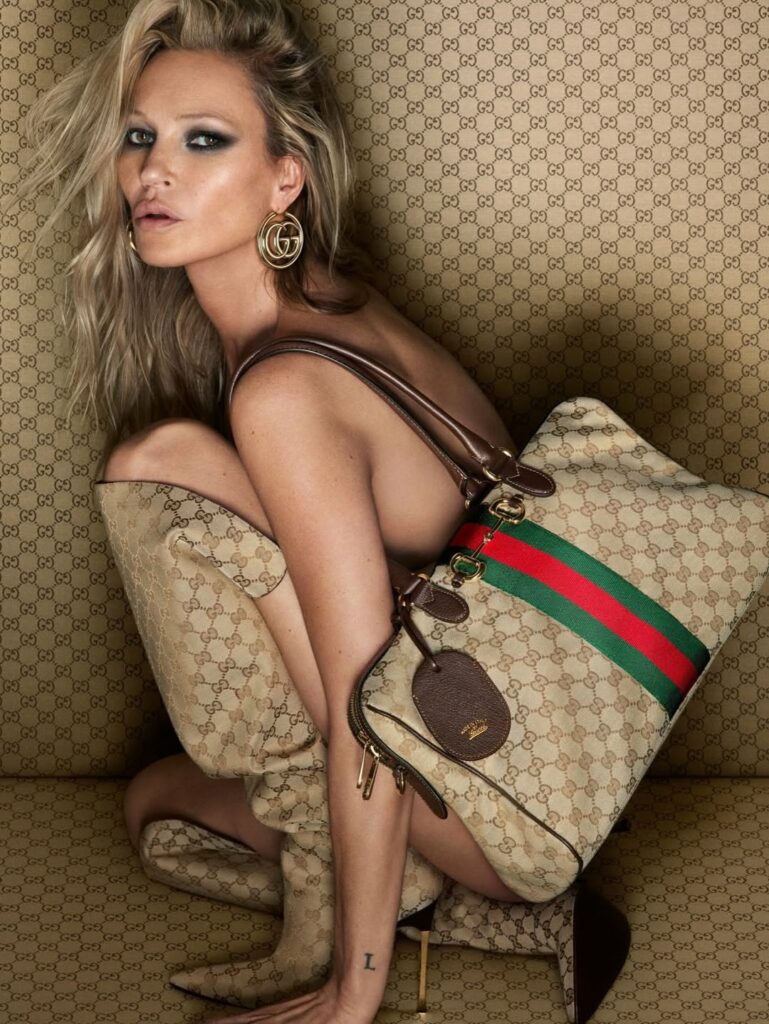
Kate Moss – Instagram
The result is a campaign that avoids overstatement. It does not rely on complex themes or heavy styling. Instead, it presents a controlled set of images built around a single idea, repeated with consistency. For a UK audience familiar with more elaborate fashion narratives, this approach reads as considered and direct.
In practical terms, it reflects how luxury is currently marketed. Individual pieces are given space to carry brand identity on their own. Here, the emphasis is clear: the bag leads, and everything else follows.
Fashion
Victoria Beckham Touches Down in Paris With a £70,000 Outfit Ahead of Her Latest Fashion Week Show
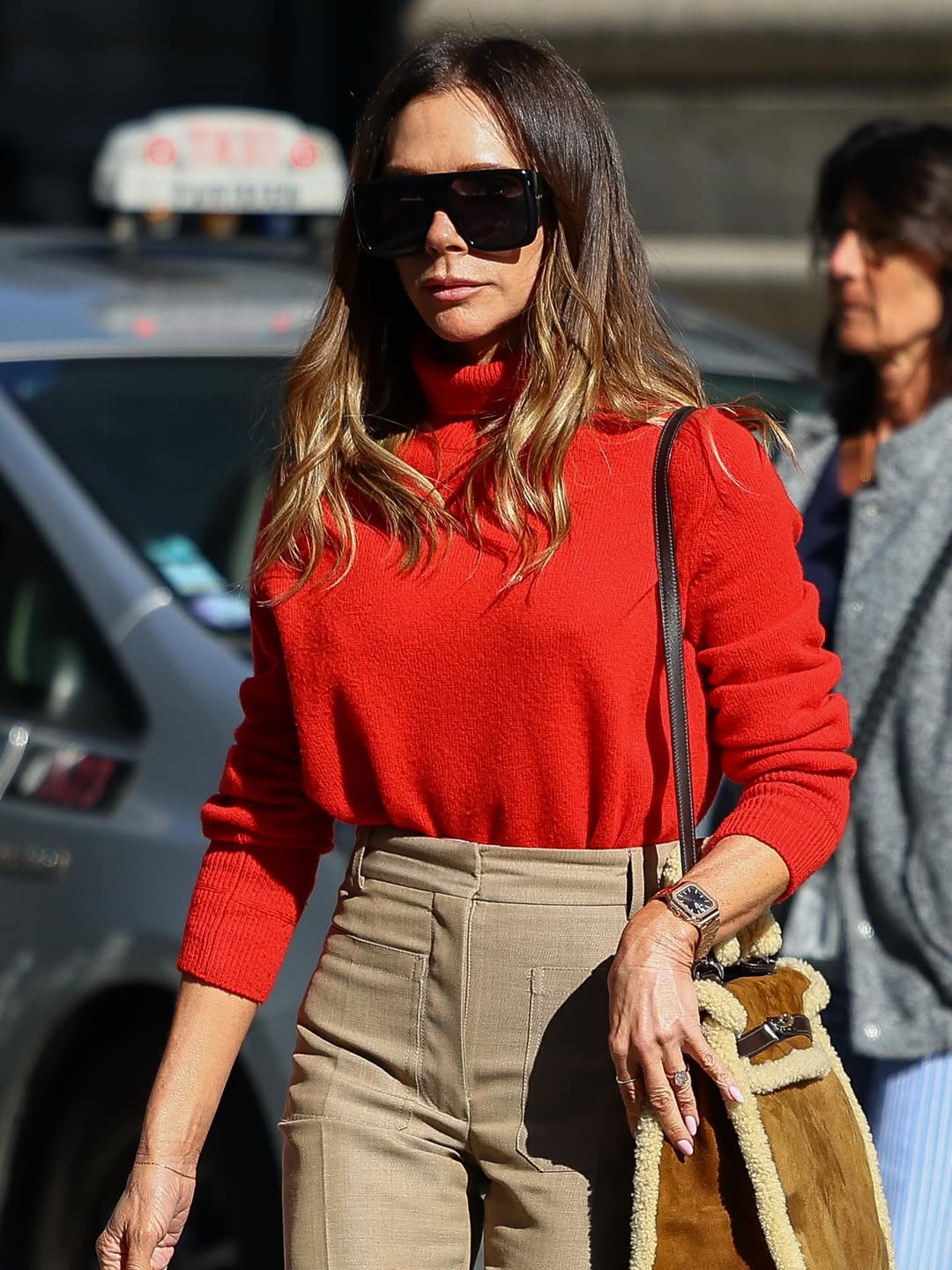
Victoria Beckham arrived in Paris ahead of her scheduled appearance at Paris Fashion Week, choosing an arrival look valued at about £70,000. The designer and former member of Spice Girls wore a structured travel outfit that reflected the tailored style associated with her ready-to-wear label.
The most notable accessory was a shearling-trimmed Kelly bag from Hermès. The limited-edition design was produced during the period when Jean Paul Gaultier worked with the brand in 2005. Vintage versions of the bag are known to command high resale prices, with estimates reaching around $80,000 depending on condition and authenticity.
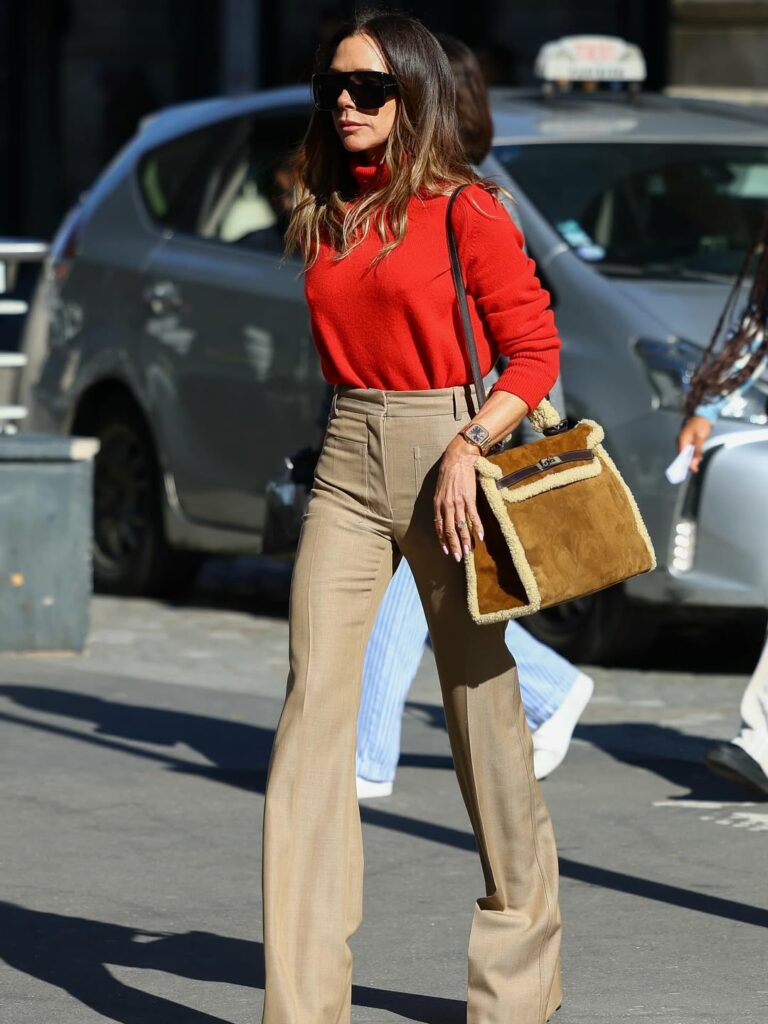
Photo Credit: Instagram
Beckham paired a tomato-red rollneck top from her own collection with high-waisted beige flare trousers. The combination focused on clean tailoring and a streamlined shape, relying on colour contrast and precise cut. Oversized sunglasses and a gold wristwatch completed the look.
The appearance came days before her runway presentation in Paris, where attention is building around her latest collection. Public outings linked to fashion week often serve to highlight a designer’s brand identity ahead of the show, particularly when the designer is also the label’s creative director.
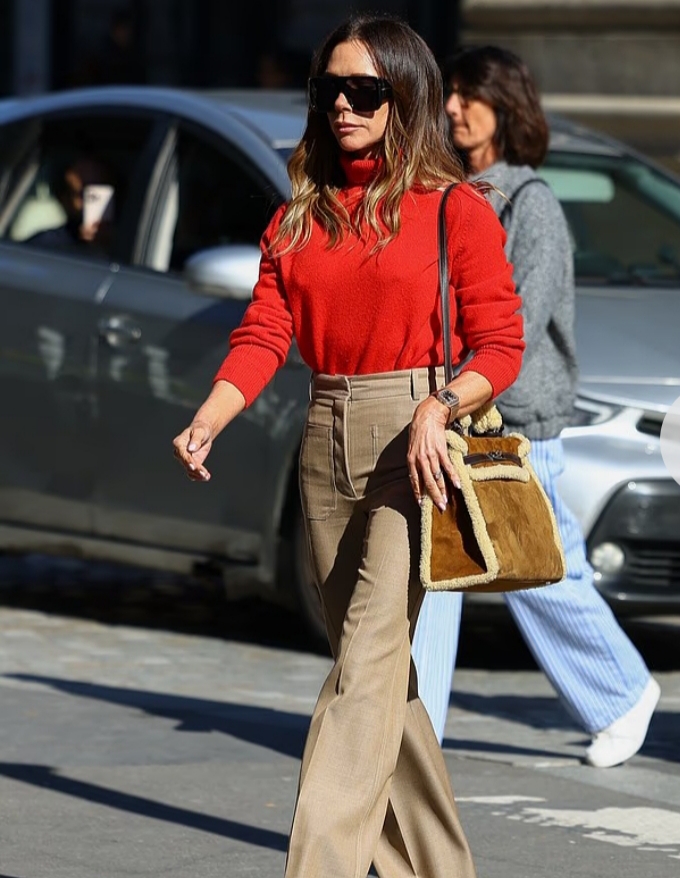
Photo Credit: Instagram
Interest in rare vintage luxury accessories continues to rise in contemporary fashion circles. Collectible handbags are frequently viewed as investment pieces as well as style items, with limited-run designs attracting strong secondary market demand.
Beckham’s Paris arrival reflects the commercial and editorial positioning common among modern designer brands, where travel appearances, show scheduling and personal styling are used to maintain momentum around seasonal collections. The outfit’s focus on tailoring, neutral structure and distinctive accessory choice aligns with the polished, wearable luxury associated with her brand.
Fashion
The Simplicity of London Fashion Week Street Style
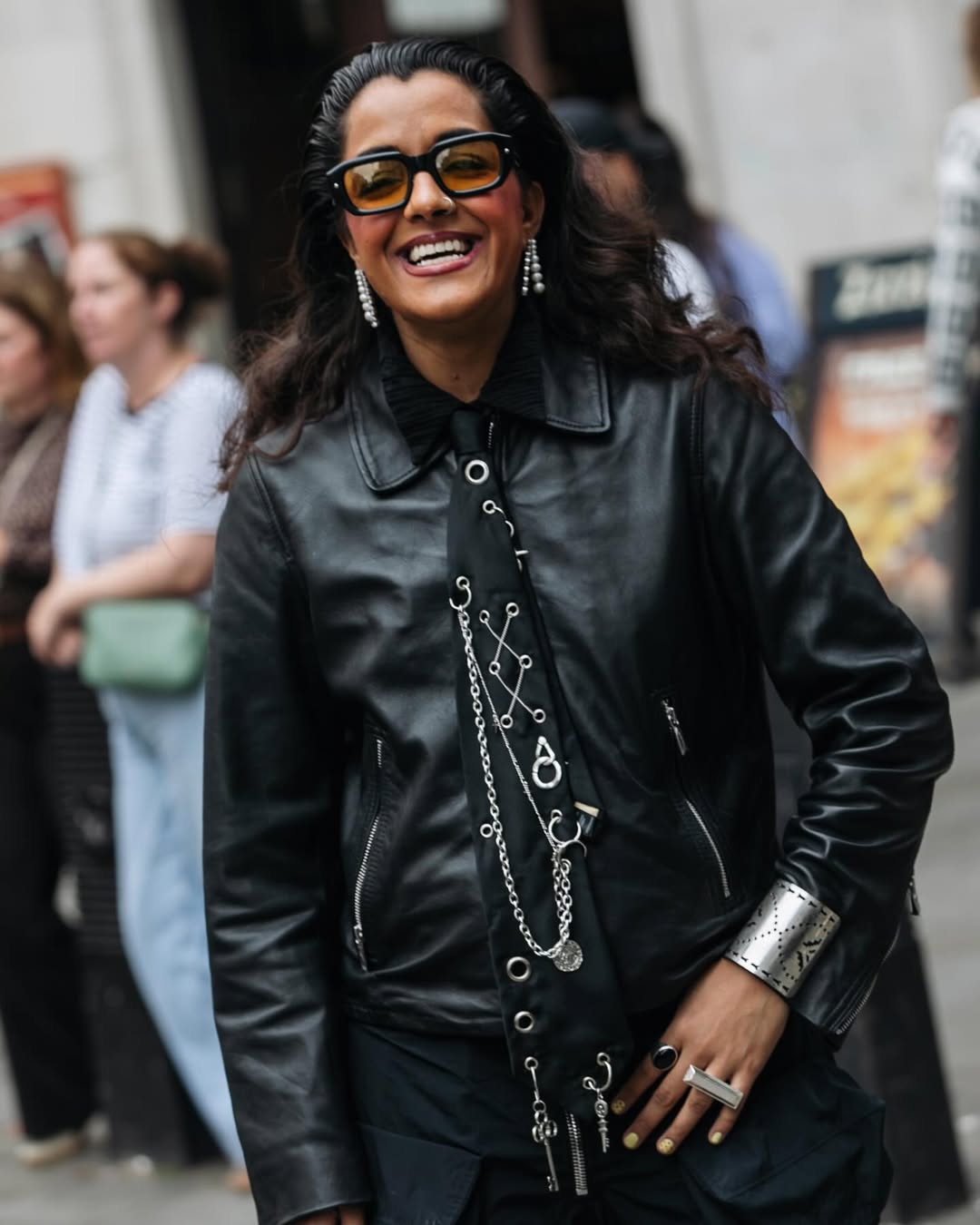
London Fashion Week has long been a testing ground for ideas that feel grounded in real life. The street style this season reflected that sensibility. Instead of exaggerated designs or attention-seeking statements, the focus was on fabrication and practical layering. What stood out was not volume or shock value, but how confidently attendees combined heritage references with modern cuts, shaping outfits that worked for the city as much as for the cameras.
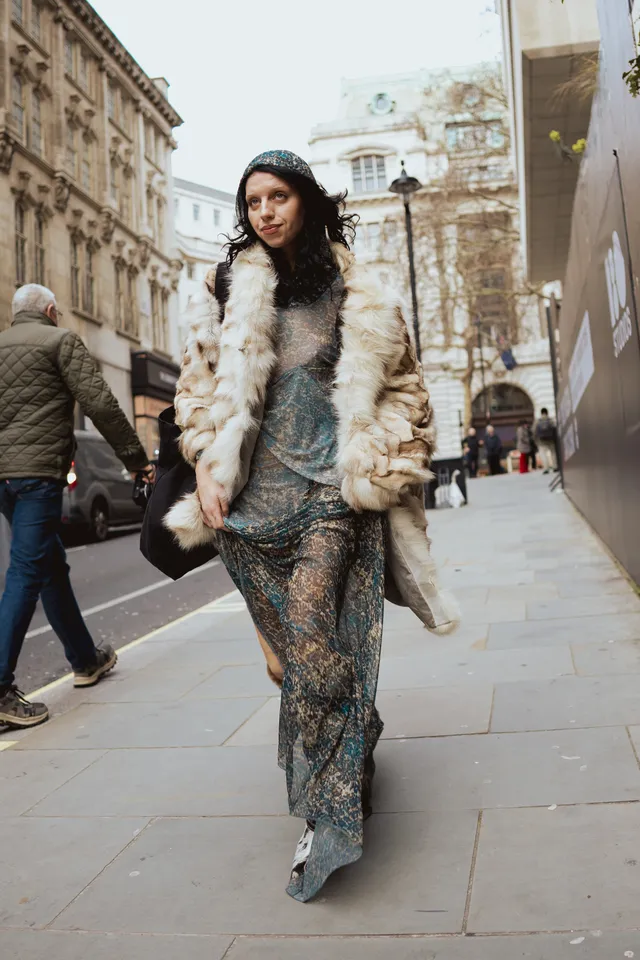
Photo: Getty Images
This season, classic British elements surfaced repeatedly, styled with updated balance in construction. Argyle knits were layered under oversized blazers and paired with relaxed trousers or structured skirts. Checked coats and kilts appeared throughout the week, grounded by practical footwear. Slouchy boots and polished flats replaced sculptural heels, keeping outfits visually coherent. Heritage fabrics were styled with contemporary cuts rather than retro references.
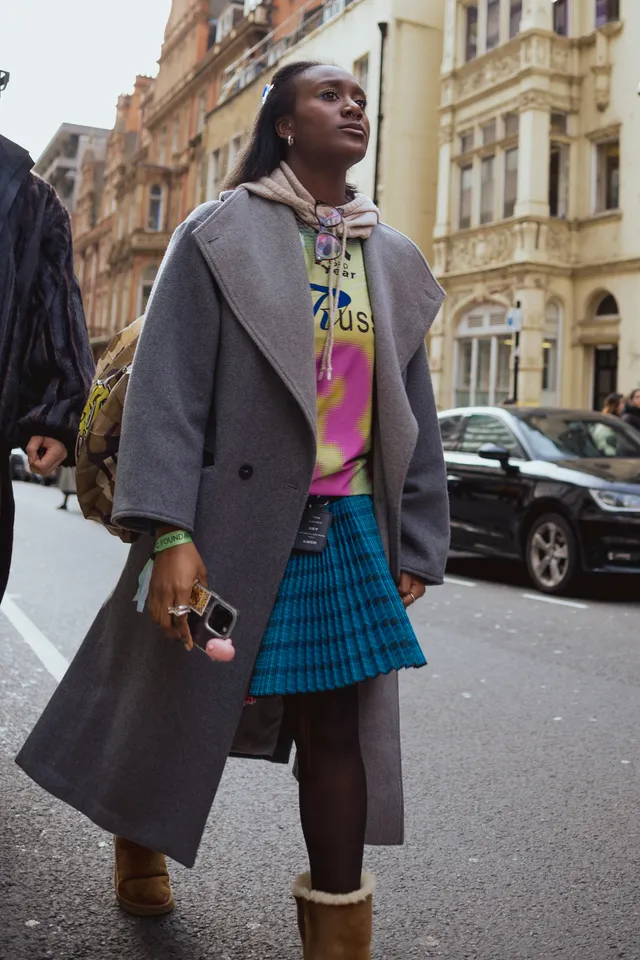
Photo: Getty Images
Outerwear shaped most looks across the week. Trench coats were worn loose over tailoring or cinched to define the waist. Leather jackets, both cropped and oversized, acted as central pieces rather than additions. Padded chore coats and structured wool overcoats were practical choices for February’s shifting temperatures. Matte leather, brushed wool and weatherproof finishes were layered together, introducing contrast while keeping the outfit clean and purposeful.
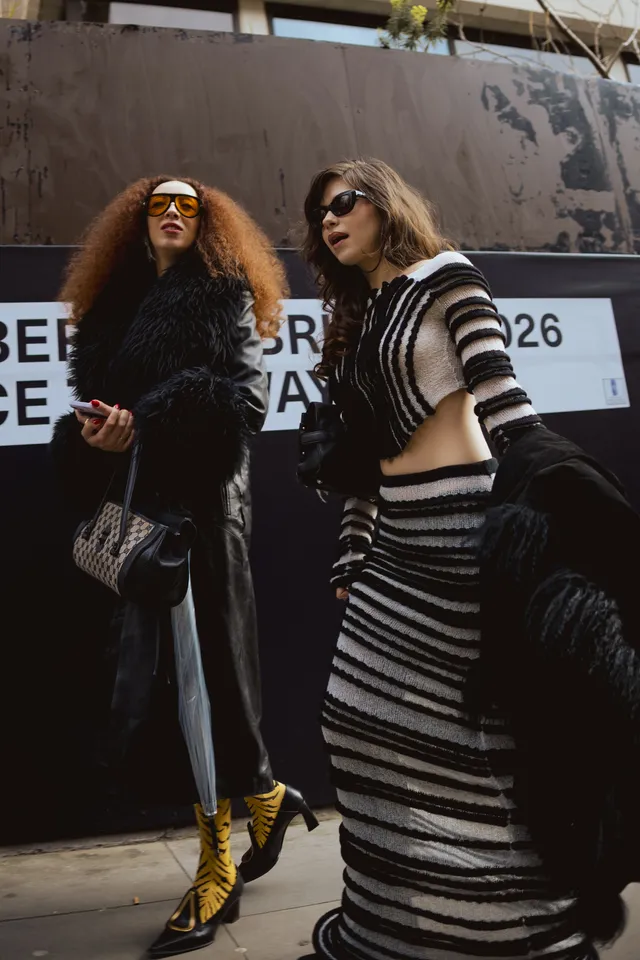
Photo: Getty Images
Print featured strongly but remained controlled. Zebra patterns were paired with neutral clothing pieces. Bold motifs were balanced with classic coats or straightforward denim. Even layered prints followed consistent colour themes. Coordinated colour choices kept combinations refined, with statement garments supported by clean tailoring or simple foundations.
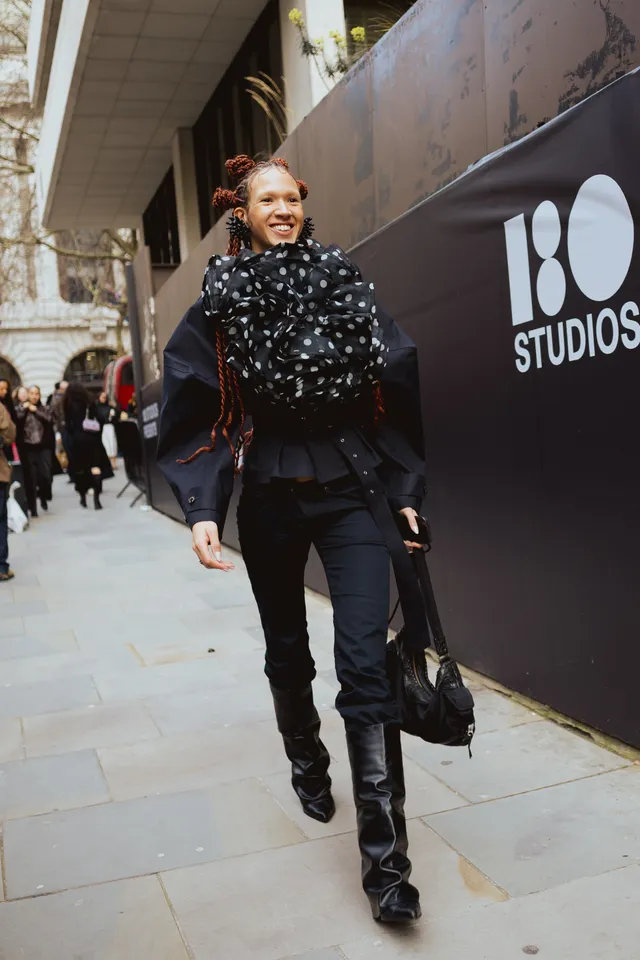
Photo: Getty Images
Accessories were chosen with practicality in mind. Structured leather bags were favoured. Footwear leaned toward durability: sturdy boots, manageable heels and ballet flats suited long days between venues. Socks worn with heels referenced preppy styling while remaining practical. Belts and scarves were used to shape outfits rather than serve as decoration.
A recurring feature among standout outfits was consistency in styling. Tailoring was softened with knitwear. Structured pieces were offset with relaxed layers. Rather than chasing a single dominant trend, attendees leaned into combinations that reflected established personal style.
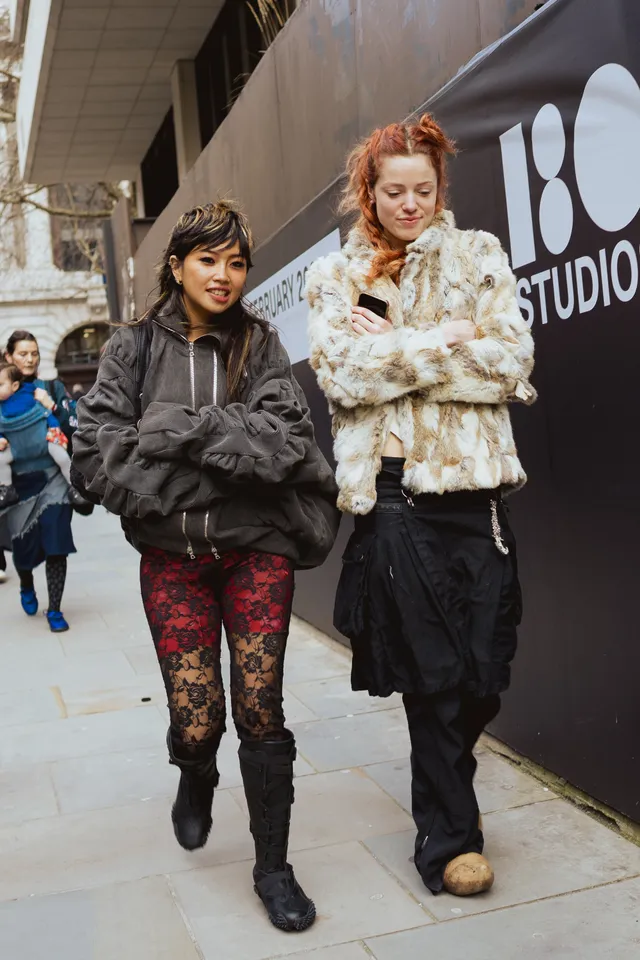
Photo: Getty Images
Compared with other fashion capitals, London presented a cohesive approach grounded in wearability. Outfits suited the city’s pace and climate, moving easily from show to meeting to evening event. Execution defined the strongest looks, with attention to construction and material choice.
That consistency remains a defining feature of London Fashion Week street style.
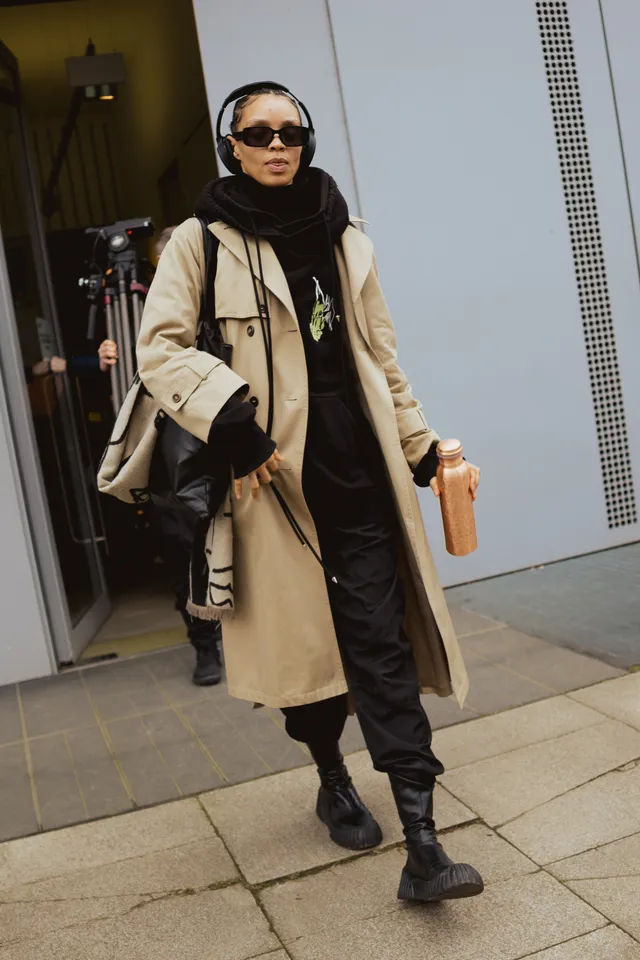
Photo: Getty Images
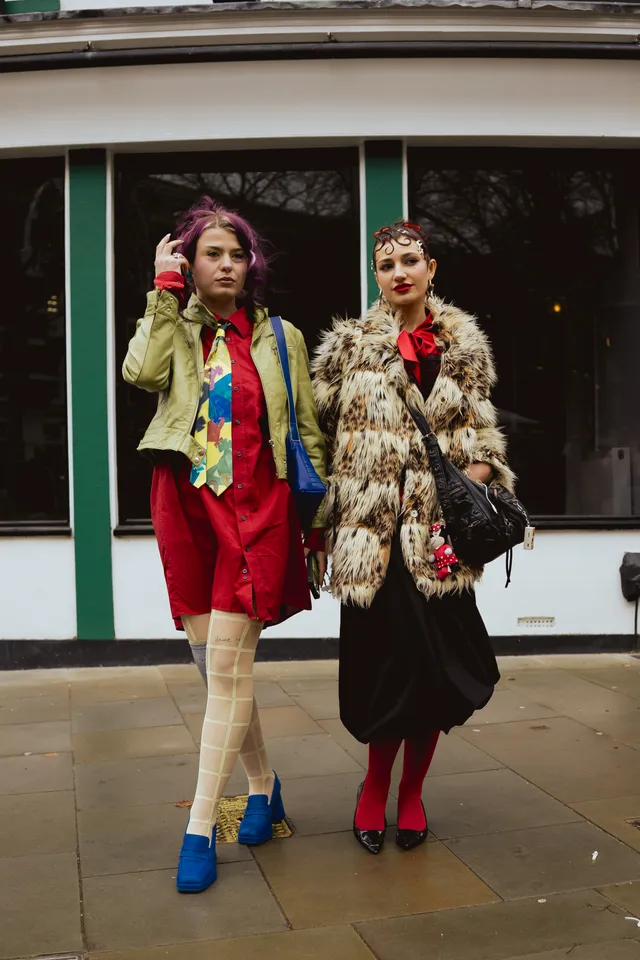
Photo: Getty Images
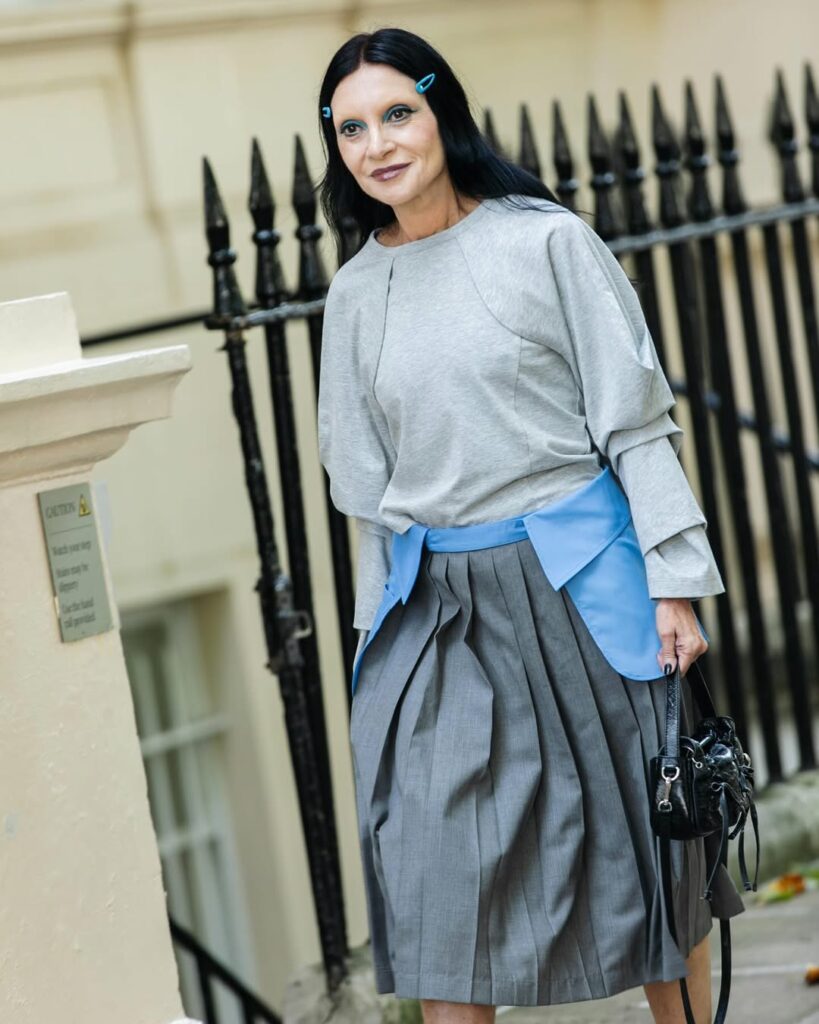
Photo – Deborahiona
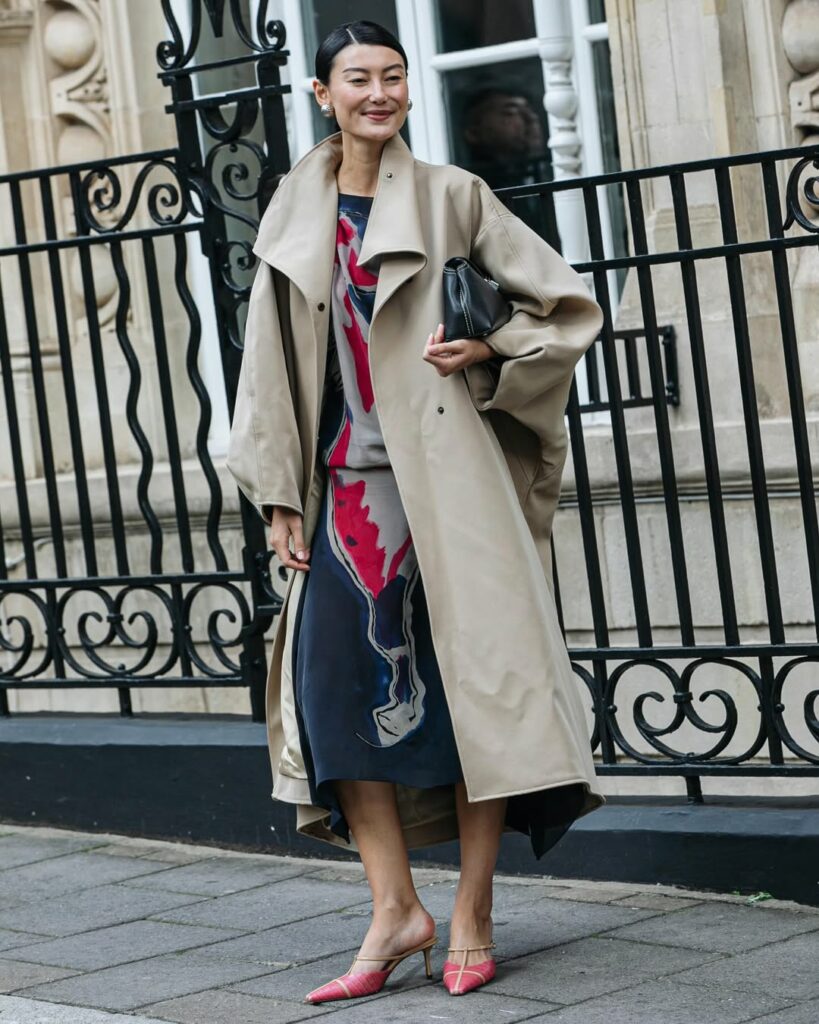
Photo – Deborahiona
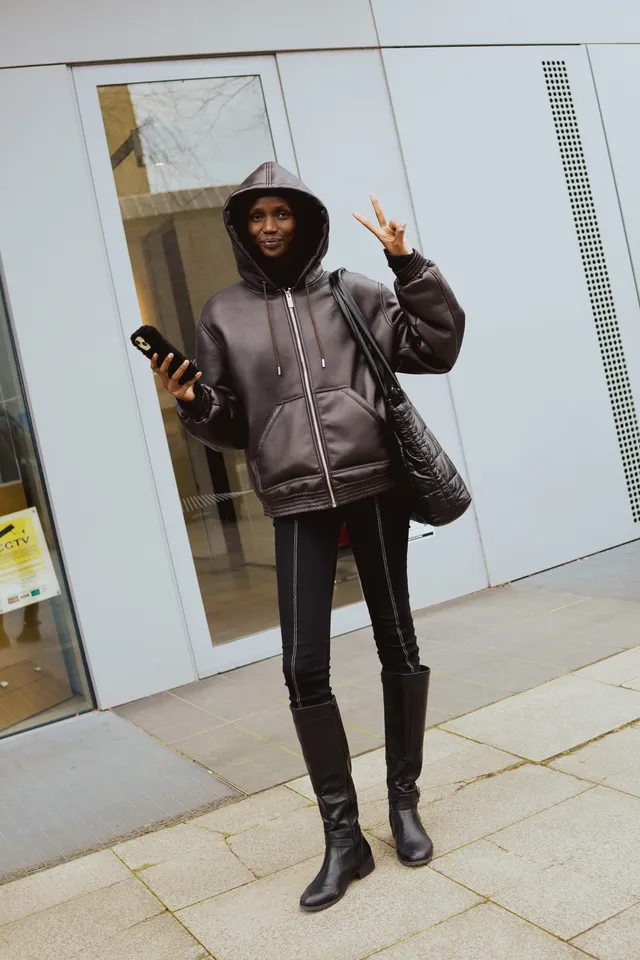
Photo: Getty
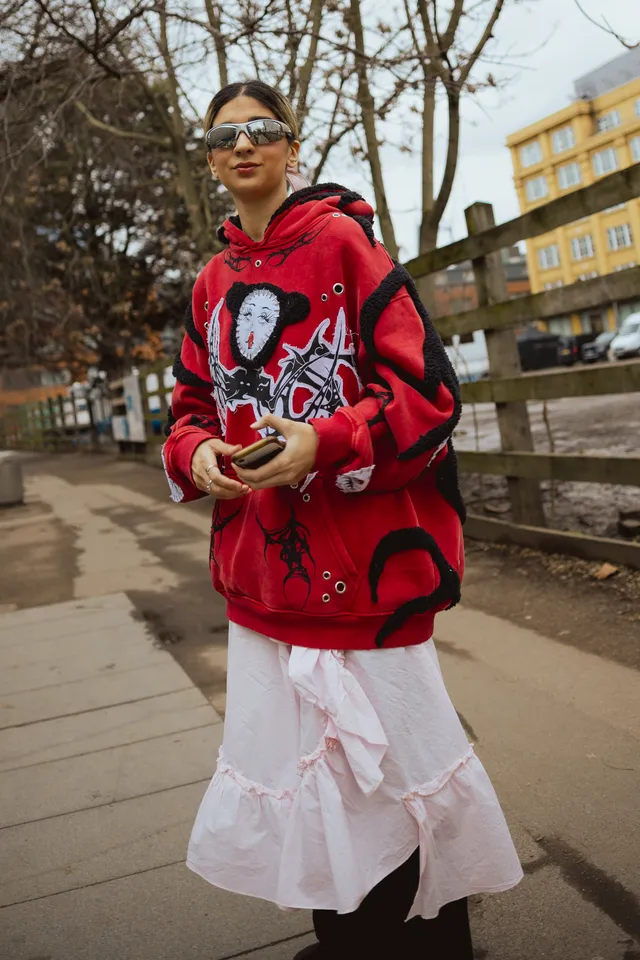
Photo: Getty
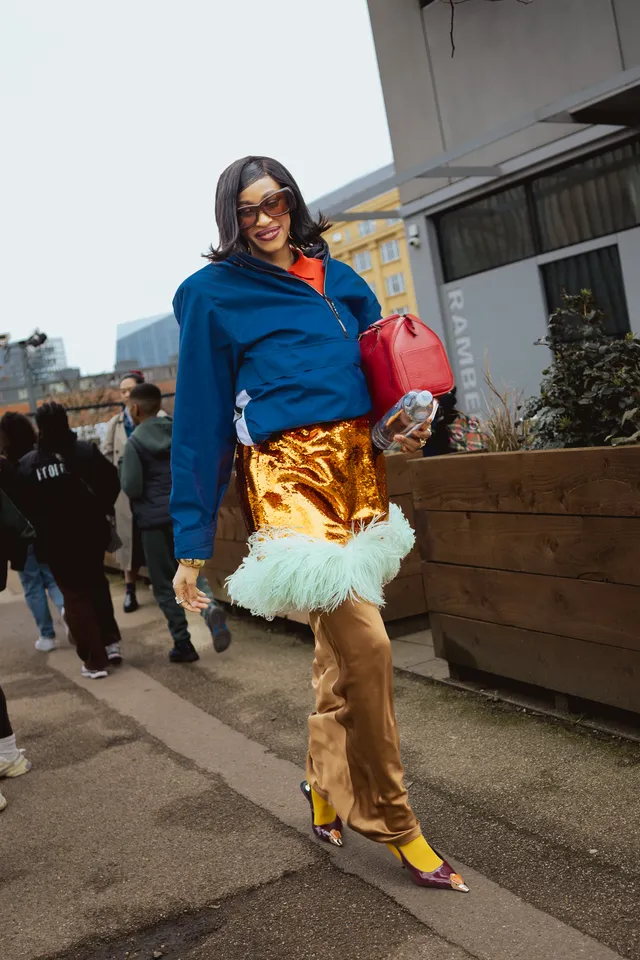
Photo: Getty
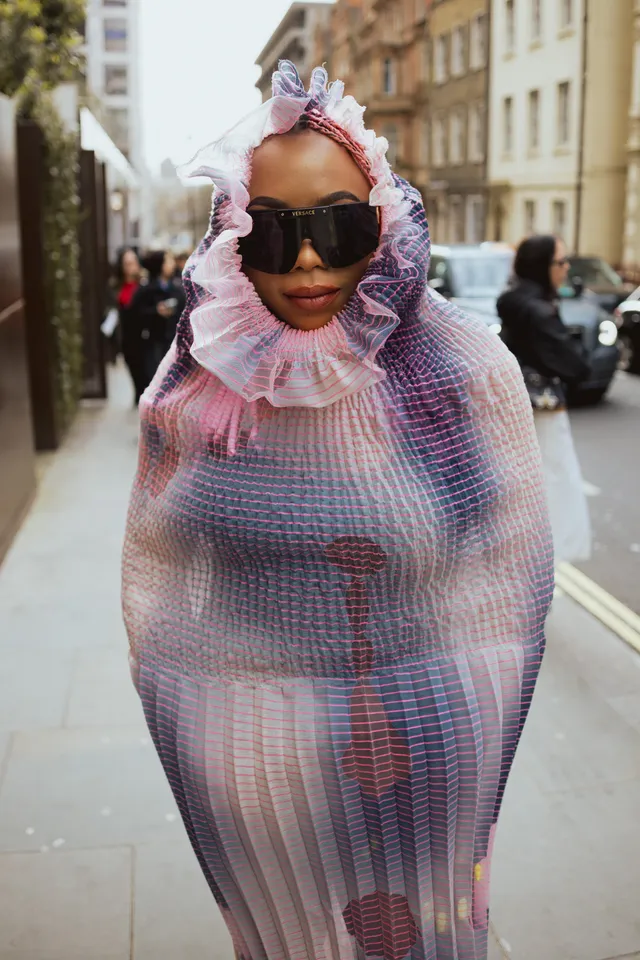
Photo: Getty
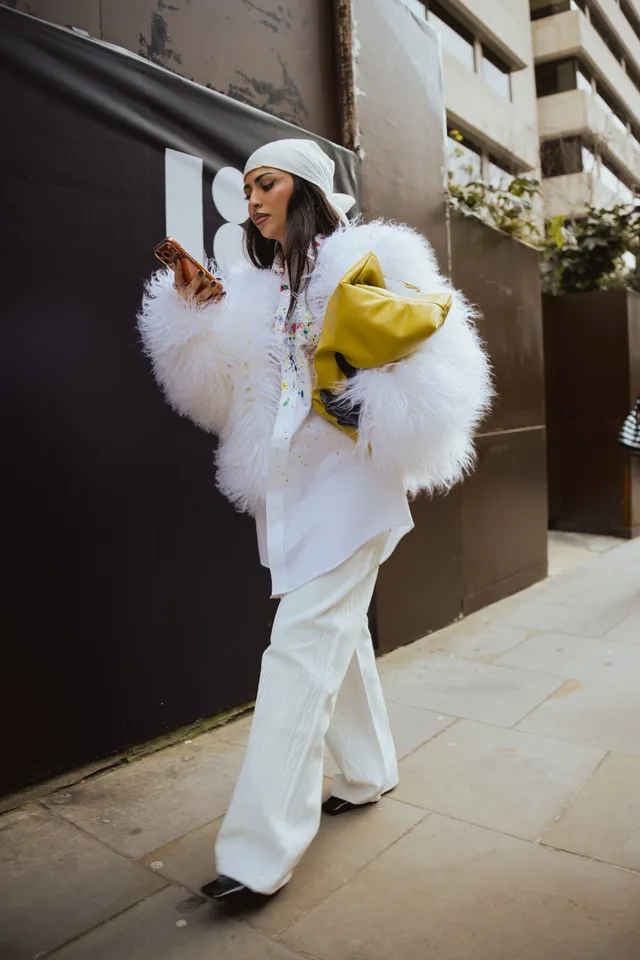
Photo: Getty
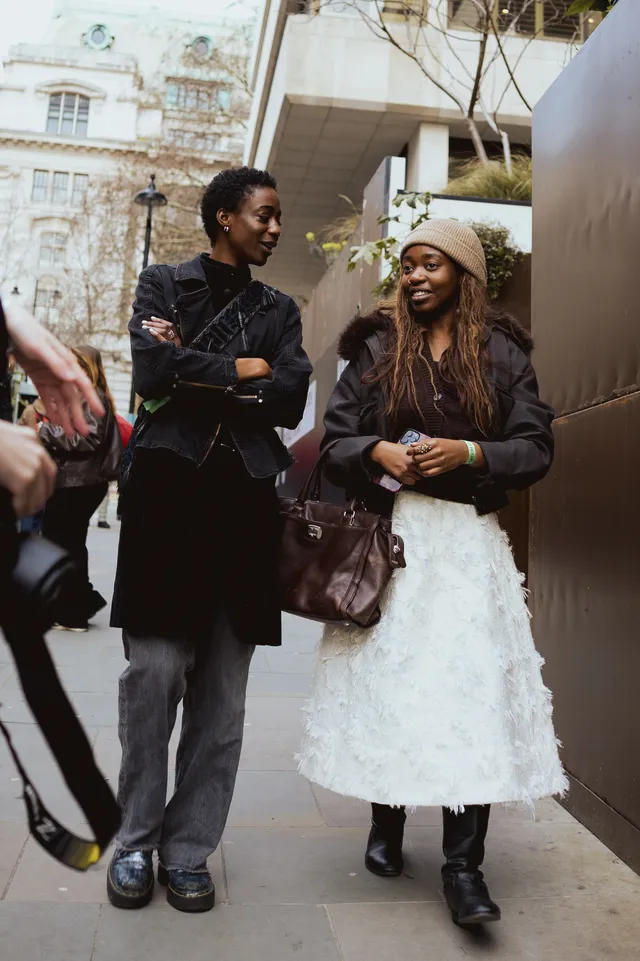
Photo: Getty
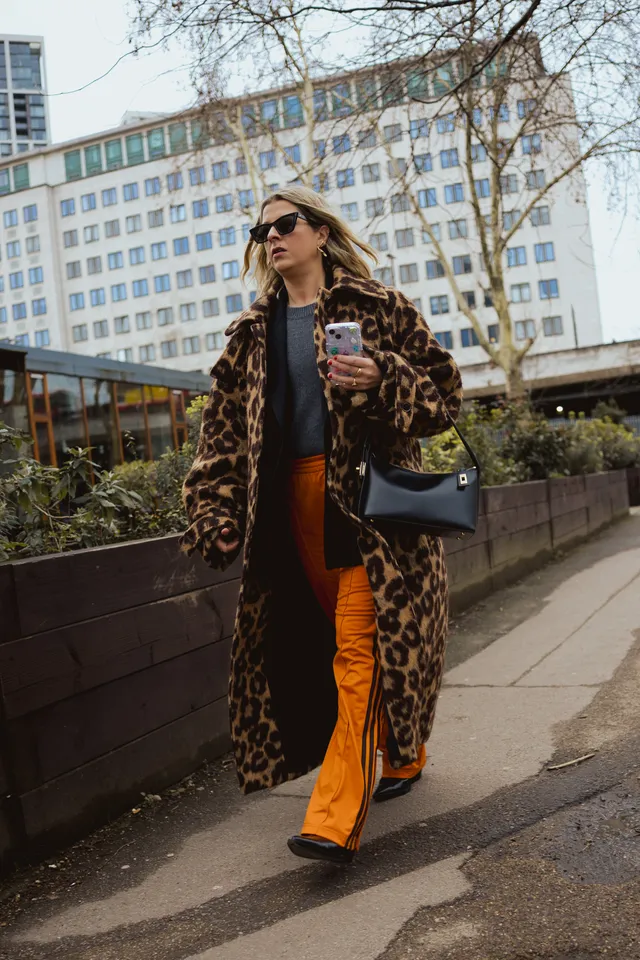
Photo: Getty
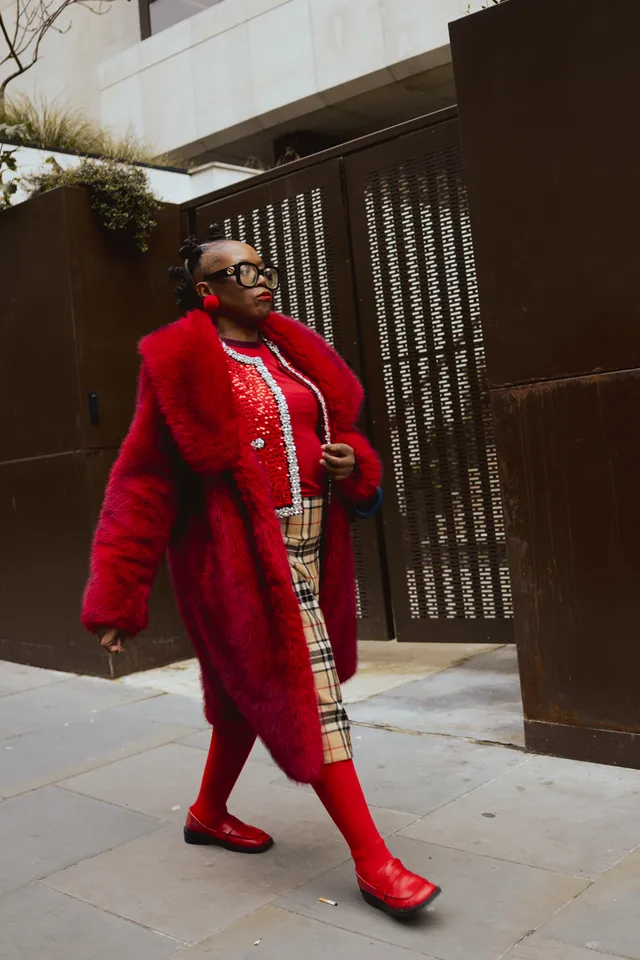
Photo: Getty
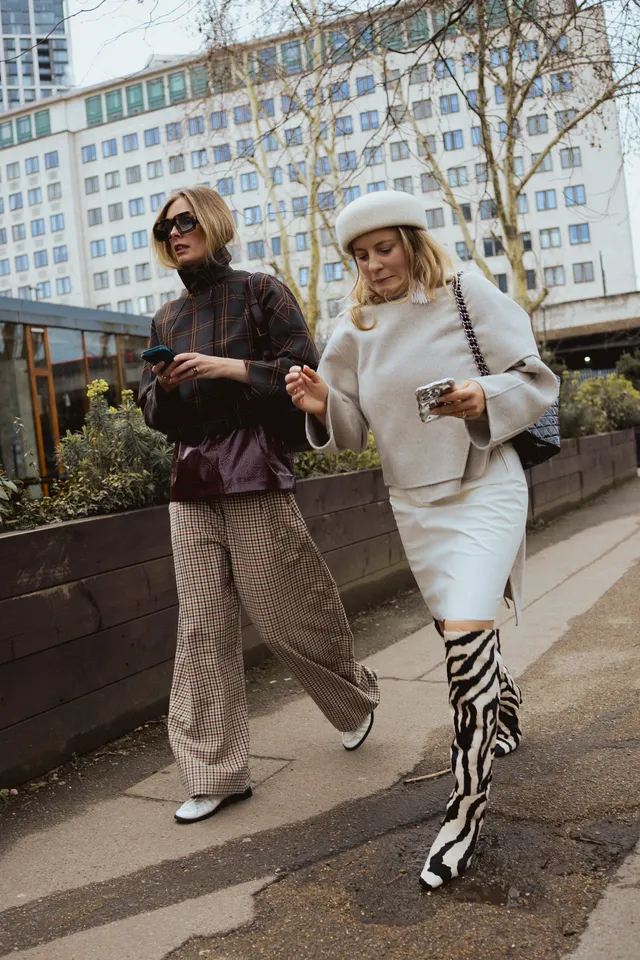
Photo: Getty
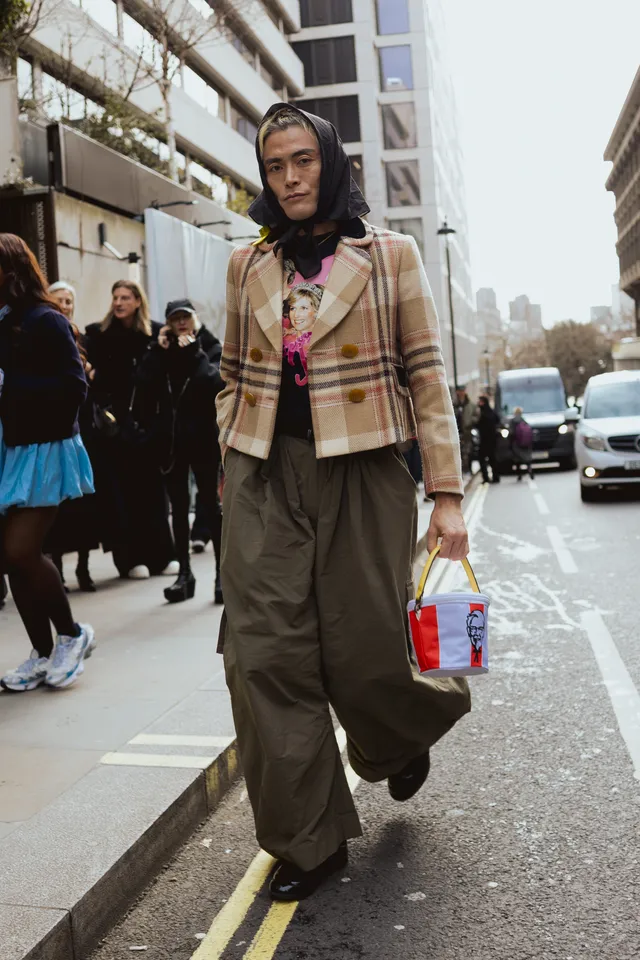
Photo: Getty
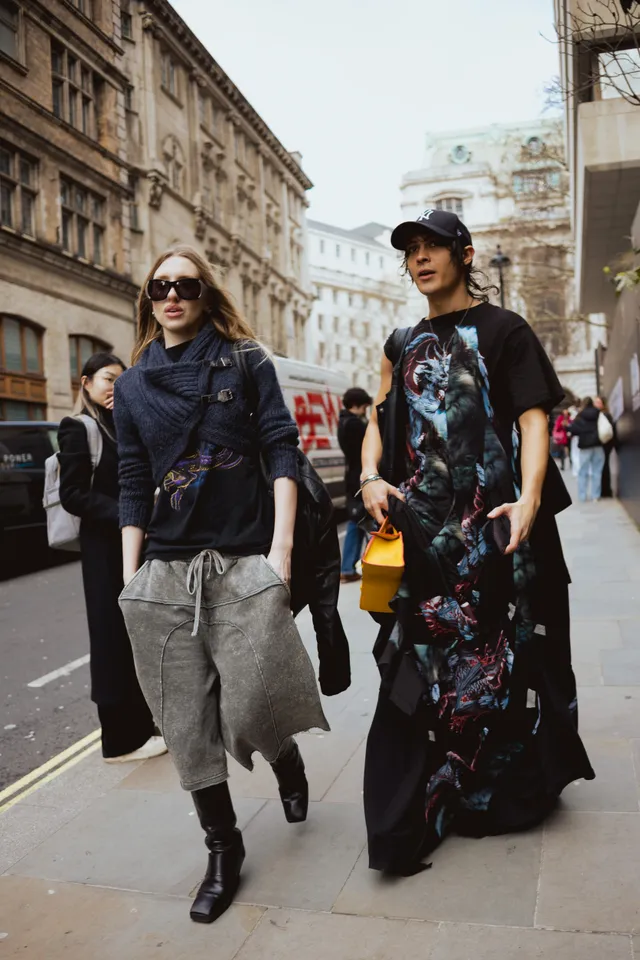
Photo: Getty
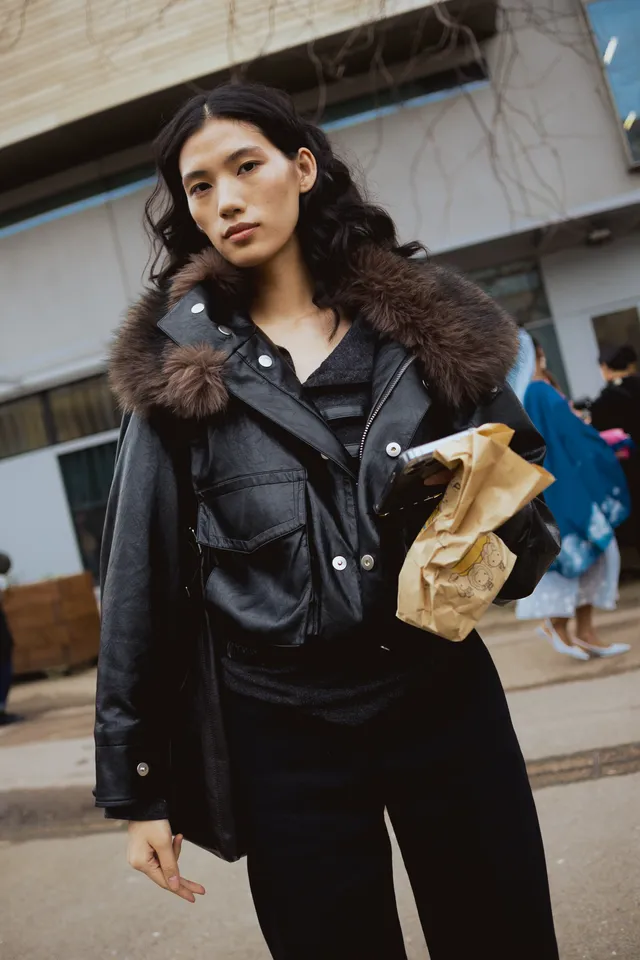
Photo: Getty

Kim Kardashian Appears in Lewis Hamilton’s Tokyo Drift Video Featuring Ferrari F40

Victoria Beckham Goes Blonde for Easter

Cruz Beckham Appears to Take Another Swipe at Estranged Brother Brooklyn Beckham in New Cooking Video


-

 Fashion4 months ago
Hailey Bieber Is Firmly on Team Going‑Out Top
-
 Fashion7 months ago
Lisa Brings Labubu to Life at BLACKPINK’s London Show
-

 Tech7 months ago
iPhone 17 Pro Max: Apple’s Boldest Upgrade
-

 Music8 months ago
Cardi B Drops Imaginary Playerz and Sets the Tone
-
 Celebrity News8 months ago
Rita Ora Toasts Husband Taika Waititi on His 50th Birthday
-
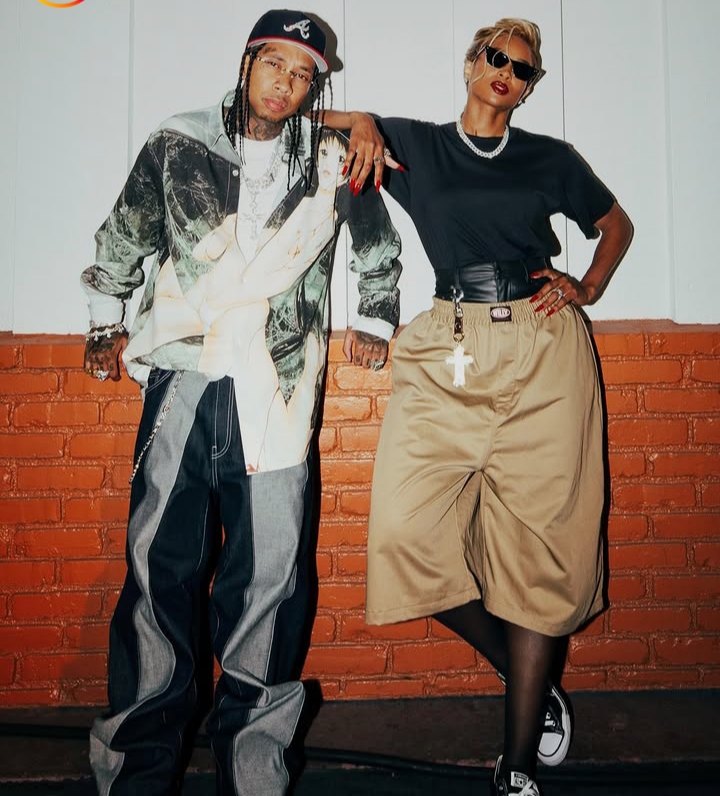 Music7 months ago
Ciara & Tyga’s “Dance With Me”: A Bold Revival That’s Got Fans Talking
-
 Celebrity Style6 months ago
Rita Ora and Primark Reveal Autumn/Winter 2025 Collection
-
 Celebrity Style6 months ago
Naomi Campbell Teams Up with Tolu Coker for Spring 2026 Collection
You must be logged in to post a comment Login